
Quick answer: Accidents do happen on the Ha Giang Loop — and most are preventable. Nearly every incident traces back to four repeat causes: inexperienced riders on manual bikes, sudden weather, overconfidence, and alcohol or night riding. Thousands of travelers finish the ~350 km route safely each year by carrying a valid license, riding slowly, allowing 3–4 days — or letting a professional Easy Rider take the handlebars.
You probably typed “Ha Giang Loop accidents” into Google at 11pm, somewhere between booking your flight and telling your mother about the trip. Good. That search says you’re exactly the kind of traveler who comes home safe.
Here’s what that worry looks like from our side of the mountain. Six in the morning on the Ma Pi Leng Pass, roughly 1,500 metres above sea level. Fog has swallowed the painted line down the middle of the road. Somewhere ahead, a truck horn sounds before a blind bend — the local way of saying I’m coming through. Our guide raises one hand. The whole group pulls over. Two minutes later the truck rolls past, the fog thins, everyone rides on. Nobody is hurt. That is what most mornings on the Loop actually look like.
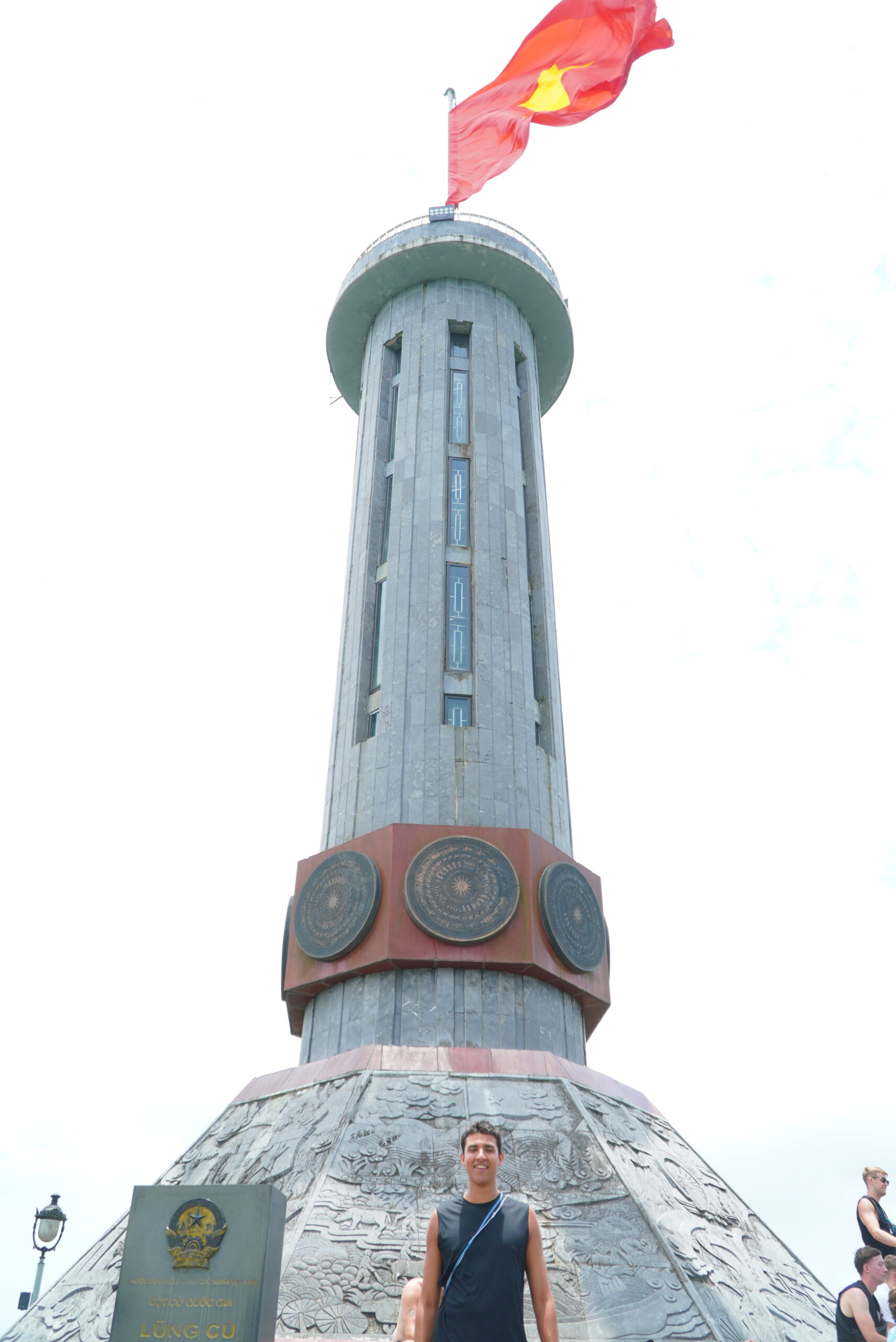
Is the Ha Giang Loop Dangerous? An Honest Local Answer
We’re Jasmine Tours, a licensed operator based in Ha Giang, and our guides have led thousands of travelers around this circuit. So here is the straight answer: yes, the Loop carries real risk. And no — it is nowhere near as dangerous as a late-night search spiral makes it feel. The route runs ~350 km from Ha Giang City through Quan Ba, Yen Minh, Dong Van and Meo Vac, across the Dong Van Karst Plateau, a UNESCO Global Geopark since 2010. The road is paved almost the entire way. Local traffic moves slowly. These are working mountain roads, not cliff-edge dirt tracks.
We won’t quote accident statistics — no reliable public count exists, and the number was never the point. The causes repeat. The same four mistakes, again and again, and each one is a decision, not a stretch of road. The mountain doesn’t choose who gets hurt. The rider’s choices do. The rest of this guide walks through those choices one by one — including the licensing rules most blogs never mention.
What Actually Causes Accidents on the Ha Giang Loop?
Ask our guides what goes wrong out here and you’ll get the same four answers, every time.
1. Inexperience on a manual bike. Many riders touch a semi-automatic or clutch bike for the first time the morning they leave Ha Giang city. Then Tham Ma Pass arrives: steep grades, hairpin stacked on hairpin, and a left hand that has never worked a clutch under pressure. Be honest about your skill before you rent — the pass will test whatever you bring to it.
2. Weather that changes in minutes. Summer (May–September) brings sudden downpours that flood corners and cut visibility while you’re still deciding whether to stop. In winter (December–February), fog on the high passes can shrink your world to a few meters. Check conditions every morning and build slack into your schedule, so waiting out a storm costs you an hour, not your trip.
3. Overconfidence. Some riders treat the Loop like a racetrack. It isn’t one. Our guides ride these corners every single day, and they ride them slowly. Out here, the speed limit is set by the road, not your ego.
4. Corn wine and night riding. Homestay dinners come with rượu ngô — “happy water” — poured warmly and often. Enjoy it. Then park the keys. After dark there are no streetlights, buffalo wander across blind corners, and trucks cut the centerline. Drink or ride, never both — and never ride at night.

Four patterns, all avoidable. But first, a piece of paperwork that decides more than most riders realize.
Do You Need a License for the Ha Giang Loop?
Yes — and this is the part most blogs skip.
Under Vietnamese law, any motorbike over 50cc requires a motorcycle license, and nearly every bike rented for the Loop is over 50cc. For foreign visitors, that means an International Driving Permit issued under the 1968 Vienna Convention, with category A (motorcycle) endorsed, carried together with your original license from home.
Here’s where travelers get caught. IDPs issued under the 1949 convention — the kind the United States issues, among others — are not recognized in Vietnam. The booklet looks official. The rental shop won’t ask. But legally, you’re riding unlicensed.
That one gap sets off everything else. Most travel insurance policies exclude motorbike accidents when the rider isn’t validly licensed — read your policy’s fine print and you’ll likely find that exact clause. And there are traffic police checkpoints on the Loop itself. No valid papers can mean a fine and an impounded bike, somewhere between Yen Minh and nowhere in particular.
We’d rather tell you this now than after a checkpoint. A scraped-up rental can be paid off. A hospital bill your insurer refuses to touch cannot.
So before you book anything, pull out your IDP and check which convention is printed on it. 1968, with category A? You’re set to self-drive. And while you’re still at the planning stage, it’s worth knowing how much the Ha Giang Loop actually costs.
If not? You still have every reason to come. Ride with an Easy Rider — a licensed local driver at the handlebars, you on the back — and the legal question disappears entirely. More on that choice below.
7 Rules Our Guides Live By on the Loop
These aren’t copied from a safety manual. They’re what our guides actually do every morning before the engines start.
1. Match the format to your real skill level. Not the level you’d like to have. If you’ve never ridden a manual or semi-automatic bike on mountain roads, the hairpins of Tham Ma Pass are not the place to learn. Easy Rider or a jeep puts you on the exact same road — with your hands free for the camera instead of the clutch.
2. Wear full gear, even in the heat. Proper helmet, jacket, gloves, long trousers, closed shoes. Every ride, no exceptions. Hot weather is uncomfortable. Road rash is worse.
3. Ride slow. More reaction time, clearer views, more photos, less fatigue by evening. Four wins, zero downsides. Slow is simply the better way to see this region — here’s our local guide to traveling Ha Giang slowly.
4. Take at least 3 days — ideally 4. The riders who get into trouble are usually the ones racing the dusk to make up time. Four days means you never have to. Bonus: October–November and March–April bring the most stable weather of the year.
5. Corn wine or handlebars — never both. Your homestay hosts will pour the “happy water” generously at dinner. Enjoy it. Ride the next morning, not that night.
6. Never ride after dark. No streetlights. Free-roaming buffalo. Trucks cutting corners you won’t see coming. Nothing on the Loop is worth viewing at night from a motorbike.
7. Ask a local every morning. Road conditions, weather, construction, livestock on the passes — locals know before any app does. Our guides brief every group at breakfast and track the roads daily. Borrow that habit — it costs nothing.

Self-Drive vs Easy Rider: Which Is Right for You?
This is the single biggest safety decision you’ll make — bigger than which helmet you buy. Here’s the honest comparison we give travelers over coffee in Ha Giang:
| Self-Drive | Easy Rider | |
|---|---|---|
| License / IDP | Motorbike license + 1968-convention IDP required | None needed — your driver carries the legal load |
| Insurance | Often void without a valid license | Far cleaner — you’re a passenger |
| Experience needed | Confident on manual/semi-auto bikes and mountain roads | Zero |
| Eyes on the scenery | Mostly on the road | Fully free for views and photos |
| Fatigue after 350 km | Real — hands, shoulders, focus | Minimal |
| Best for | Experienced riders with proper paperwork | Everyone else — and plenty of experienced riders too |
Easy Rider fits you if any of these ring true: limited riding experience, nerves about mountain passes, a serious camera habit, more interest in local culture than clutch control, family in tow, or simply wanting a holiday instead of a test.
Let’s kill one myth. Choosing a Ha Giang Loop Easy Rider isn’t the “beginner option.” Some of the most experienced riders we host choose the back seat on purpose — because they’d rather watch the mist lift off Ma Pi Leng than stare at the tarmac in front of their wheel. That’s not the timid choice. It’s the informed one.
There’s a third option, too: a jeep or private car, popular with families and small groups. Whichever you pick, a guided Ha Giang Loop tour adds layers you can’t buy separately — a briefing every morning, bikes on a regular maintenance schedule, and a local team watching road and weather daily, ready to reroute when conditions turn.
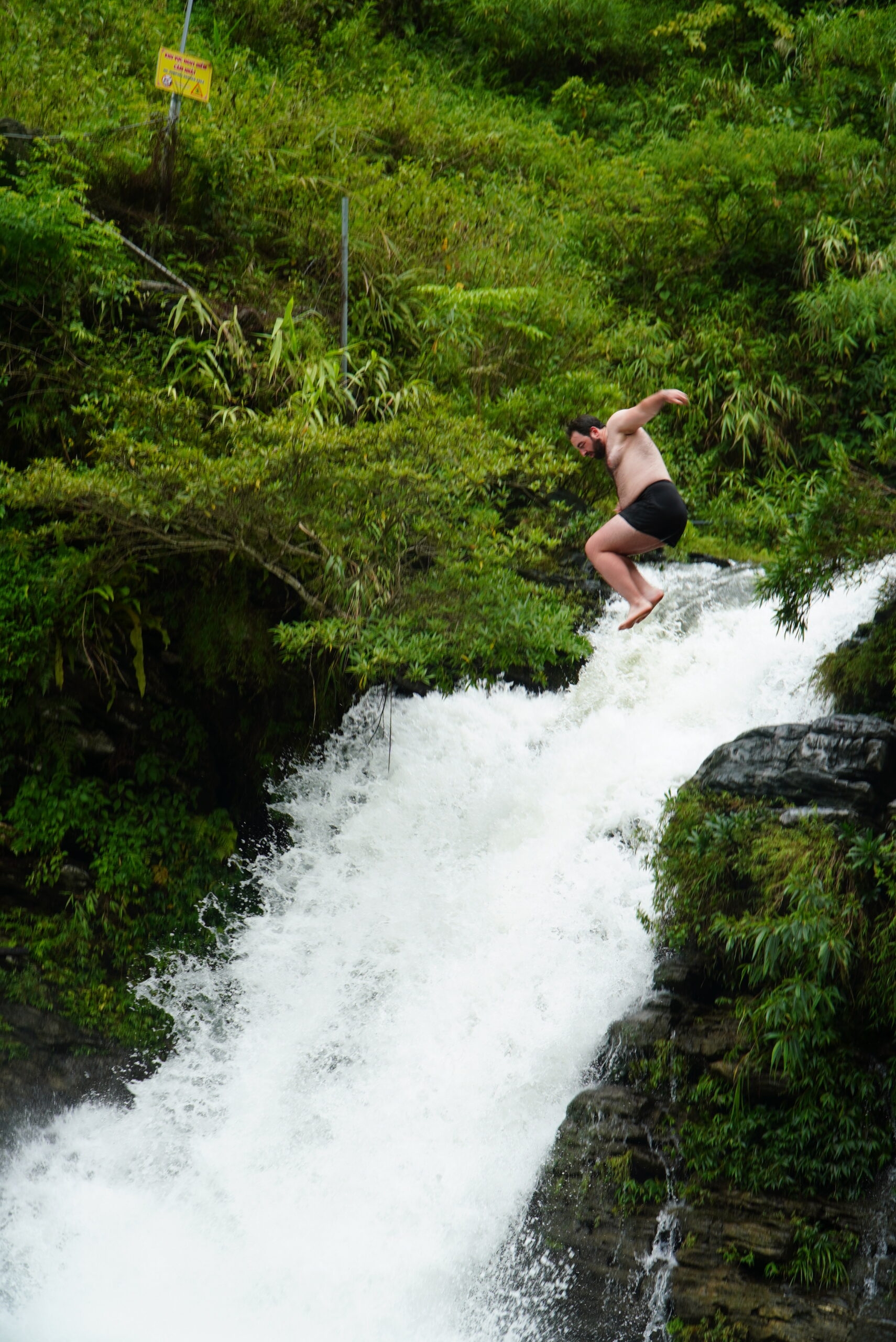
What Should You Do If an Accident Happens?
The riders who know the emergency steps in advance are the calmest ones on the road. Fear shrinks when you have a plan.
- Stay calm and get off the road. If you can move safely, get yourself and the bike out of the lane. Traffic keeps coming around blind corners.
- Do not move anyone who is seriously injured — unless they’re in immediate danger where they lie.
- Call 115, Vietnam’s emergency medical number. Save it in your phone before you set off.
- Call your guide or tour operator immediately. This is exactly what we’re here for.
- Get to the nearest medical facility once it’s safe to travel.
On that last point, the map is kinder than it looks. There’s a provincial hospital in Ha Giang City and district medical centers in Dong Van, Meo Vac, and Yen Minh — the main towns on the route. You are never as far from help as the mountains make you feel.
And on a guided tour, steps 3 and 4 happen for you, in Vietnamese, while you catch your breath — our guides know the closest clinic from any bend on the Loop.
Why We Plant Trees on the Roads You Ride
There’s one more thing that keeps this road safe, and it has nothing to do with helmets or brakes. It has to do with roots.
Through our Plant Today – Green Tomorrow initiative, guests on selected routes plant native trees alongside local families. Here’s the connection most riders never make: bare hillsides erode, and erosion is exactly what cracks and crumbles the tarmac under your wheels. Every sapling holds the soil, keeps these hills green, shelters the wildlife that belongs here, and preserves this landscape for whoever rides through after you.
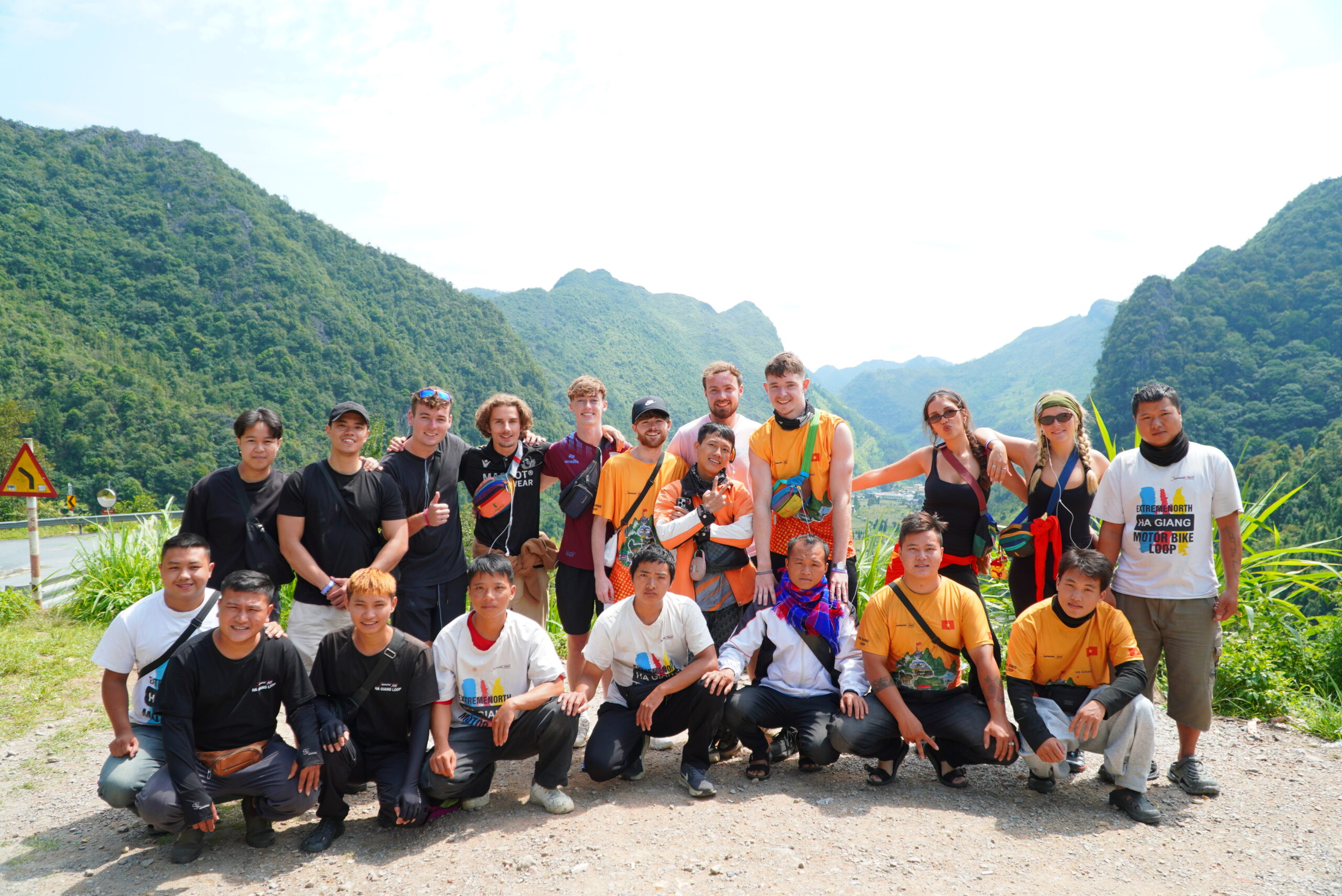
So when you press soil around a young tree with a family from the village, you’re not doing charity. You’re maintaining the road.
Respect the mountain. The same attitude that keeps you safe on the pass is what keeps the pass standing at all.
Ha Giang Loop Safety: Frequently Asked Questions
Is the Ha Giang Loop dangerous?
It can be — but rarely by surprise. Nearly every accident traces back to four preventable causes: inexperience on manual bikes, sudden weather, overconfidence, and alcohol or night riding. Thousands finish the ~350 km loop safely each year by riding slowly, taking 3–4 days, and picking a format that matches their skill.
Can beginners do the Ha Giang Loop?
Yes — on the back of an Easy Rider bike or in a jeep. You get every pass, every view, none of the handlebars. Self-driving only makes sense if you’re already comfortable on a manual bike and carry a valid license with a 1968-convention IDP.
When is the best time to ride?
October–November and March–April are the most stable. Summer downpours can flood a corner in minutes; winter fog on the high passes sometimes cuts visibility to a few meters.
How many days do you need?
Three minimum. Four is safer — rushed riders are the ones still on the road at dusk, when the Loop forgives the least.
Are there police checks?
Yes. Ride without a valid license and 1968-convention IDP and you risk a fine, a temporarily impounded bike, and travel insurance that pays nothing if you crash.
Is a guided tour safer?
Yes. Daily briefings, maintained bikes, guides who know which corner hides a truck, and emergency help one call away — that removes most of what goes wrong out here.
Reading about accidents isn’t fear. It’s preparation. The mountains don’t need you to be brave — just ready.
You searched for accidents. You’ll come home talking about the view.
Not sure whether to self-drive? Message us on WhatsApp (+84 375 299 476) with your riding experience and dates. We’ll answer honestly — even if the answer is “don’t ride it yourself.” And ask us about Plant Today – Green Tomorrow if you’d like to leave Ha Giang greener than you found it.
Written by the Jasmine Ha Giang team — Thuy Bui, co-founder of Jasmine Ha Giang, born and raised here, together with our local guides who ride these roads every day. Jasmine Ha Giang is a licensed local tour operator, Business Registration Certificate #5100503221 (issued March 11, 2025).
